How to Pick the Right Fixture?
Choosing the right outdoor lighting comes down to how you plan to use the space and what you want the lighting to achieve. Different fixtures serve different purposes, so it helps to think in terms of function, placement and overall effect. When selecting your setup, consider:
- The type of fixture you need, depending on what you want to highlight or illuminate
- The power setup, whether low voltage or line voltage is best for your installation
- The lighting effect you want to create, including color temperature and beam spread
Here’s how those choices play out in practice.
Spot vs. Undercap vs. Ceiling Lighting
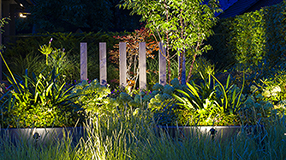
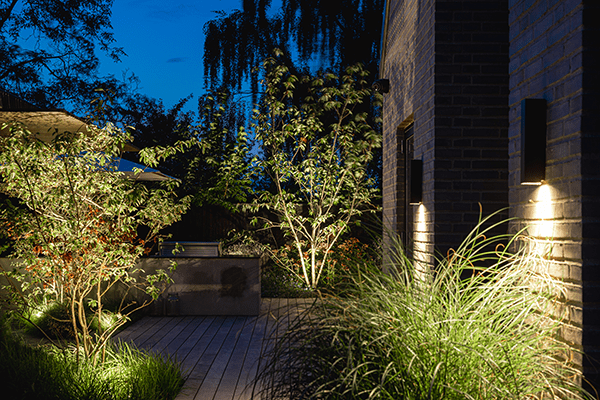
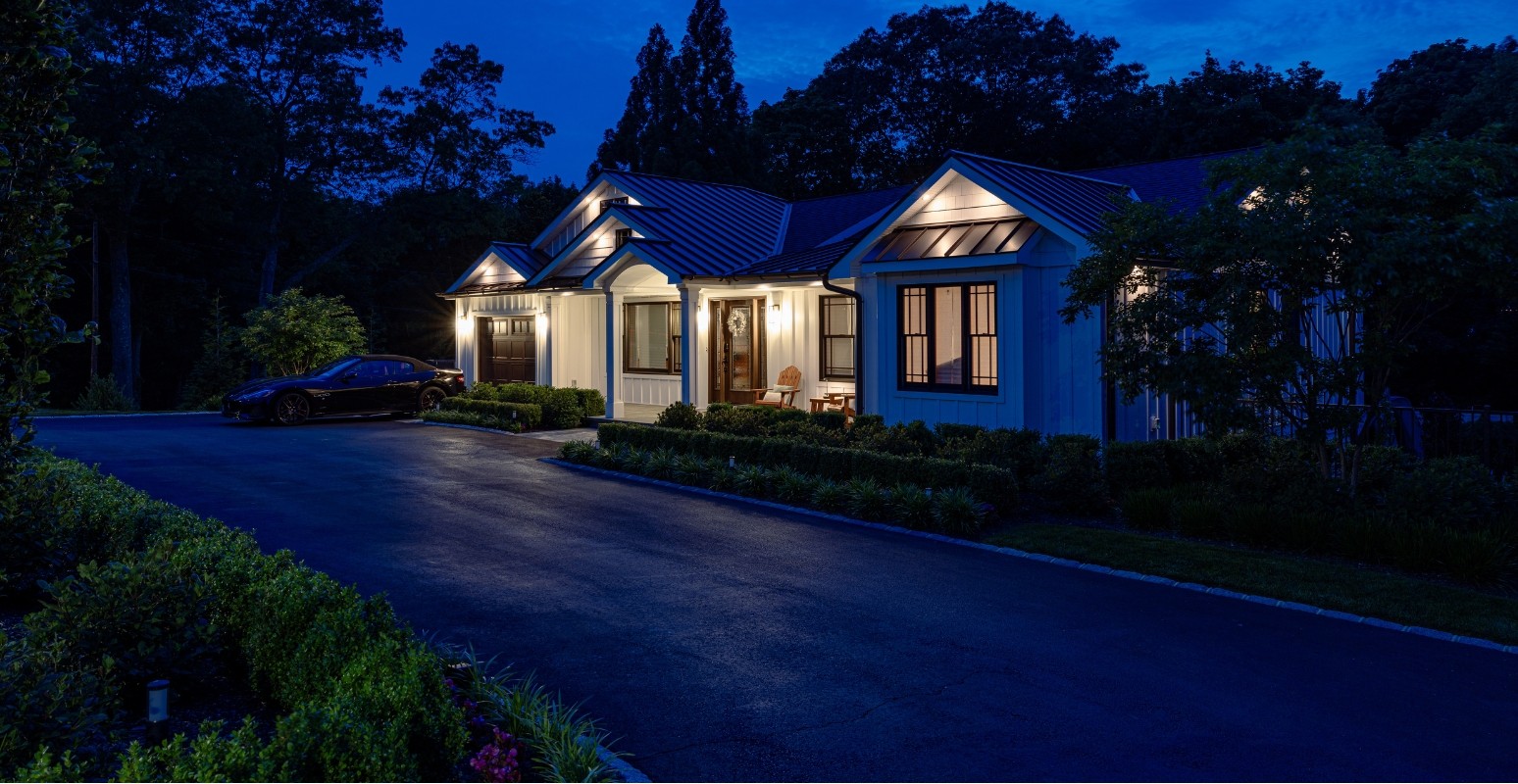
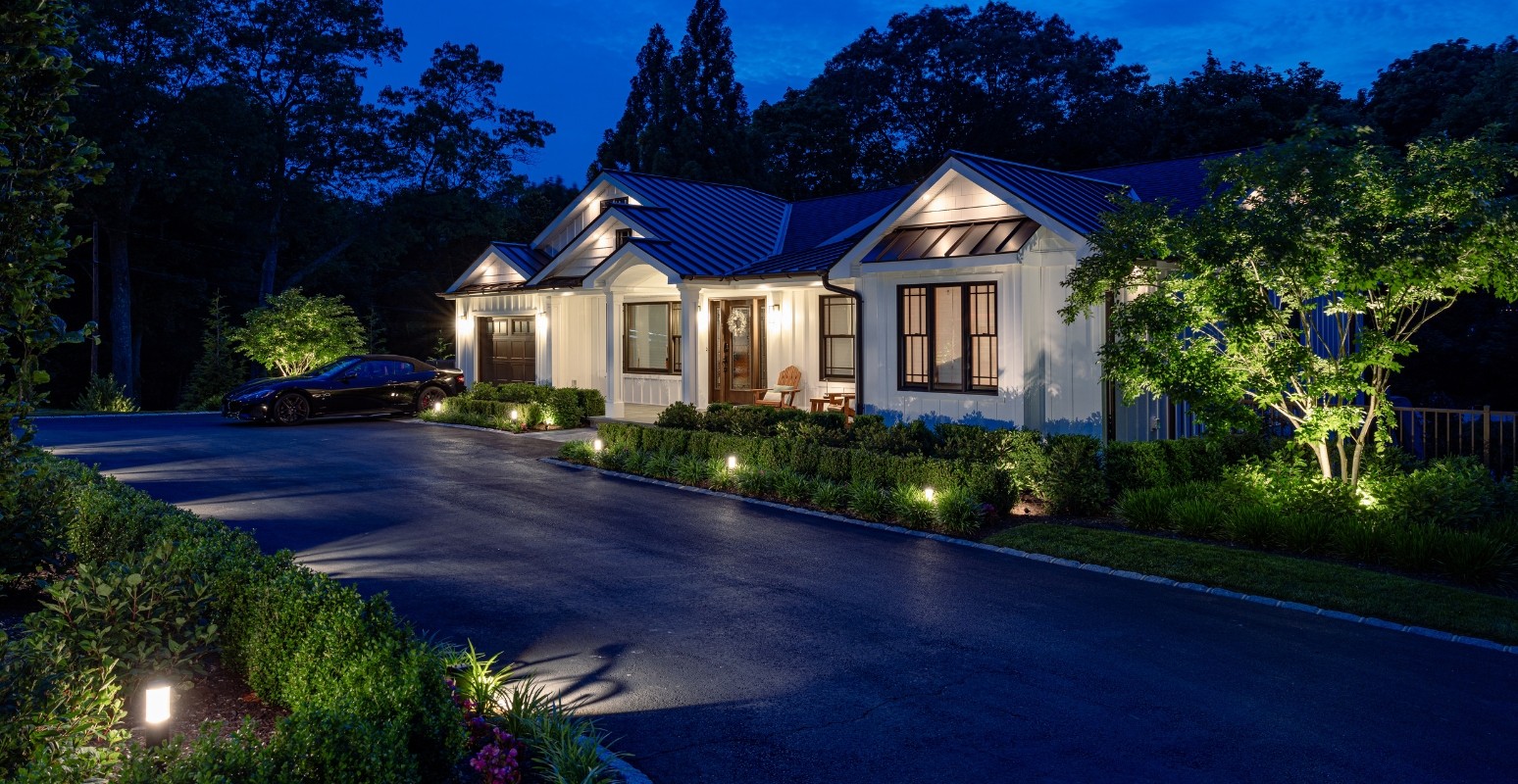
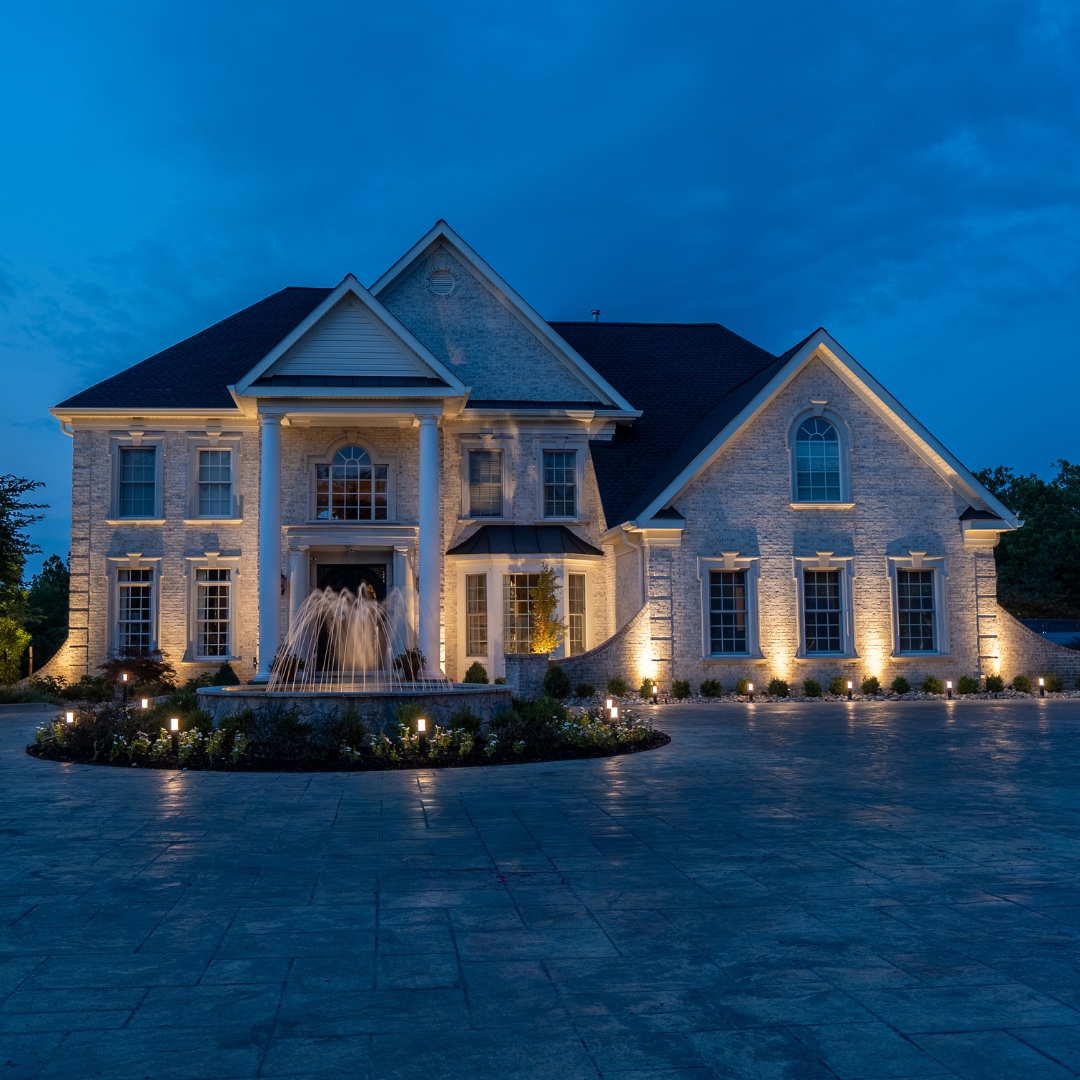
Spotlights are typically used to highlight features. This might be a tree, a wall or a specific architectural detail you want to draw attention to after dark. They create contrast and depth and help certain elements stand out without lighting the entire space.
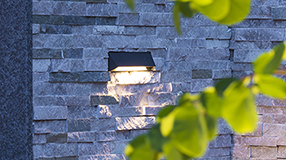
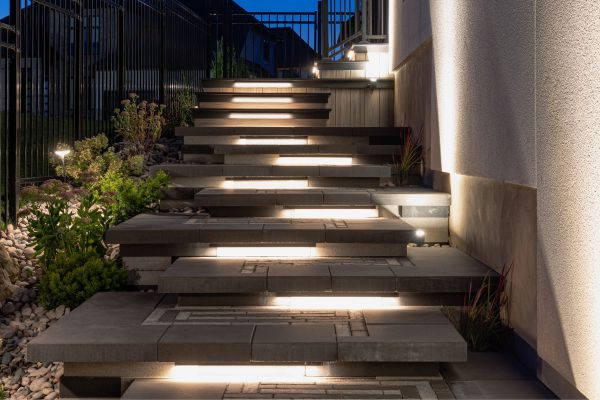
Undercap lights are more subtle and are often built into walls, steps and seating areas. They give off a soft, indirect glow that helps define edges and improve visibility without being too noticeable. This type of outdoor lighting works well where you want guidance and atmosphere at the same time.
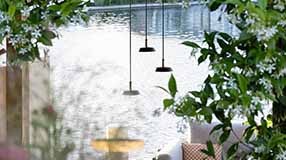
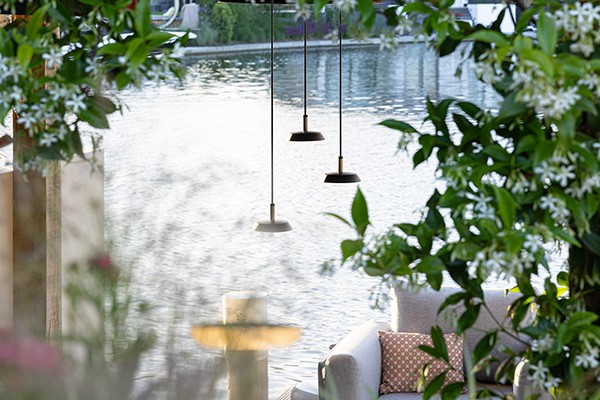
Ceiling lighting is more direct and is usually placed above seating or dining areas. It provides enough light to comfortably use the space for everyday life. These are a good choice for covered patios, pergolas or outdoor kitchens where people gather.
Line Voltage or Low Voltage – What’s Right for You?
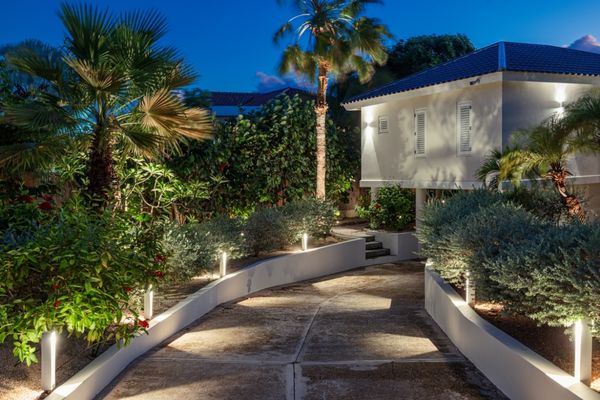
The right choice depends on how you plan to use your lighting and how much flexibility you need from your setup. Low-voltage lighting runs on a 12V supply, which is much lower than standard household electricity. This makes it a safer option for use outdoors and is also easier to install. Low-voltage lights are great for most garden, pathway and ambient lighting setups, especially if you plan to expand or adjust your layout over time.
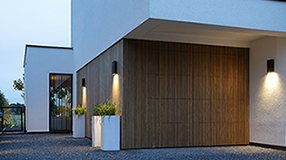
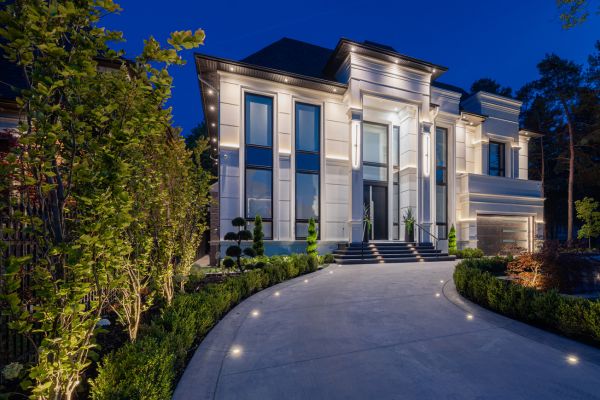
Line voltage lighting, on the other hand, connects directly to your home’s electrical system. It delivers a stronger, more consistent level of brightness. It is often used in areas such as garages, facades or larger covered spaces where you need more output. If you're working with an existing electrical connection, this could be a better fit.
Color Temperature & Beam Spread Tips
Color temperature affects how warm or cool your lighting appears. Warmer tones create a softer, more relaxed feel that works well in seating areas and social spaces. Cooler tones feel brighter and are often used where visibility is more important, such as driveways or work areas. In general, warmer light works better where you want to relax, while cooler light is best for areas where you need to see clearly.
Beam spread controls how wide or narrow the light is. A narrow beam focuses light on a specific feature, making it ideal for highlighting details. A wider beam spreads light across a larger area and is a better match for general lighting where you want even light without strong contrasts. If you want to draw attention to a feature, choose a narrower beam. For larger areas, a wider beam will give more even coverage.