What are the best driveway lights?
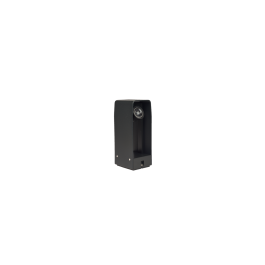
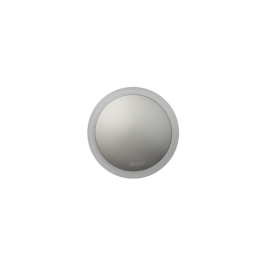
The best driveway lights depend on your specific needs, driveway configuration, and aesthetic preferences. For flush, minimalist installations, recessed lights like PUCK and HYVE offer drive-over capability with excellent durability. Pathway lights such as ACE and EVO provide versatile directional lighting with adjustable positioning. in-lite's comprehensive range ensures you'll find the perfect solution for your unique requirements, all backed by our industry-leading 5-year warranty.
How far apart should you place driveway lights?
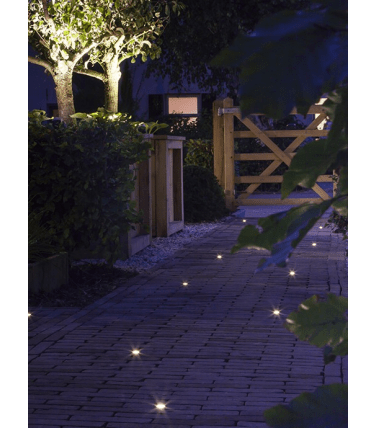
Optimal spacing for driveway lights typically ranges from 1.5 to 2 meters (5 to 6.5 feet) apart for consistent coverage. However, spacing can be adjusted based on your desired lighting intensity and aesthetic preferences. Closer spacing creates brighter, more uniform illumination, while wider spacing produces a more subtle, ambient effect. For recessed lights like PUCK, maintain regular intervals for professional appearance. Path lights offer more flexibility in positioning to accommodate landscaping and architectural features.
Do driveway lights need to be hardwired?
in-lite driveway lights operate on safe, efficient 12-volt low-voltage systems, eliminating the need for dangerous high-voltage hardwiring. Our innovative low-voltage system allows for simple installation and future expansion without electrical expertise. The low-voltage approach provides multiple benefits: enhanced safety, energy efficiency, easier installation, and the flexibility to add fixtures over time. Professional installation of the main transformer and cable runs is recommended, but individual fixtures can be easily connected using our proprietary connection system.
How to install recessed lights in a concrete driveway?
Recessed lights like PUCK and HYVE are made to sit flush and take the weight of a car, which makes them ideal for a concrete driveway. Set each fixture into a cored or pre-formed recess in the concrete, run the 12V low-voltage cable to it, and connect it with the twist-on EASY-LOCK connector. It is easiest to plan the positions and the recesses before the concrete is poured or cored, so the housings sit level with the surface. For a new or existing driveway, an in-lite dealer or contractor can help you get the placement and drainage right.
Recessed vs. standing pathway lights for driveways, which is better?
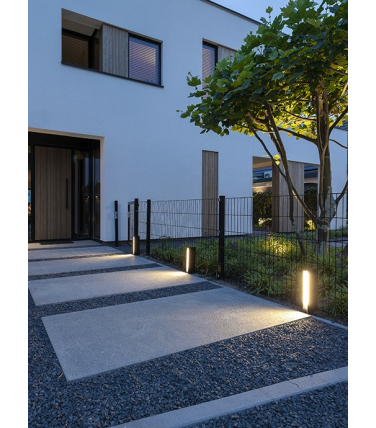
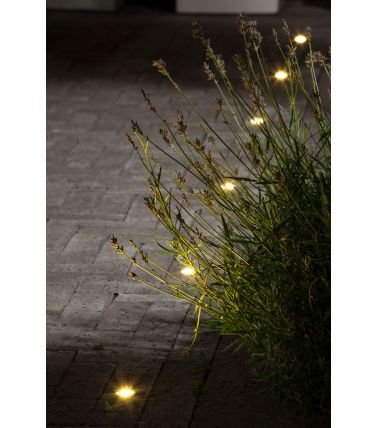
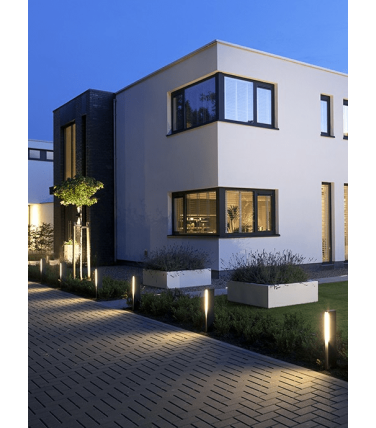
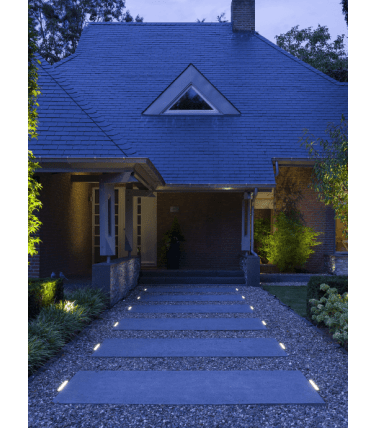
It depends on the look you want. Recessed lights like PUCK and HYVE sit flush with the surface, so cars can drive over them and the driveway stays clean and minimalist by day. Path lights like ACE and EVO stand above the surface and cast a wider, directional glow that clearly marks the edges of the driveway at night. Many designs combine the two, using recessed lights across the drivable area and path lights along the borders.
Best practices for driveway lighting design and safety?
Good driveway lighting guides cars and people without glare. Light the edges and any change in level, such as steps or a slope, so the boundaries are easy to read after dark. Keep spacing even for a clean look, aim path lights away from oncoming drivers, and use drive-over recessed fixtures like PUCK where cars pass. Because in-lite runs on a 12V low-voltage system, the wiring stays safe underfoot and you can adjust or expand the layout later.
Do I need a professional to install driveway lighting?
in-lite driveway lighting runs on a 12V low-voltage system, so you can install and expand the fixtures yourself using the EASY-LOCK connector, with no electrical expertise required. For a driveway it helps to have a professional handle the parts that involve the concrete or the main cable runs, such as coring recesses for drive-over fixtures or routing cable under a paved surface. Your in-lite dealer can advise on which parts to take on yourself and where a contractor adds value.