How to design your pond lighting
Good pond lighting design starts with the water feature itself. The goal is to enhance what's already there, the movement, the reflection, and the depth, without overexposing it. Here's how to approach the two most common pond lighting applications.
Highlighting waterfalls and fountains
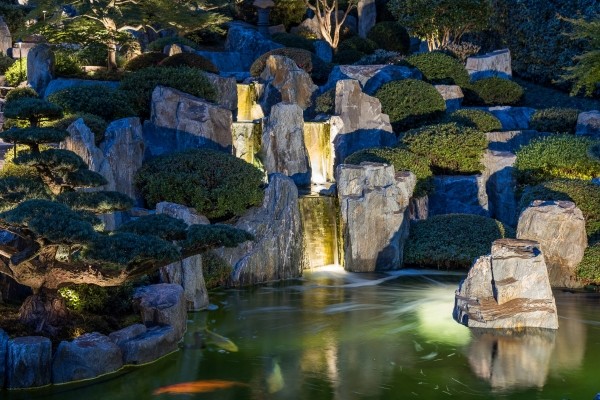
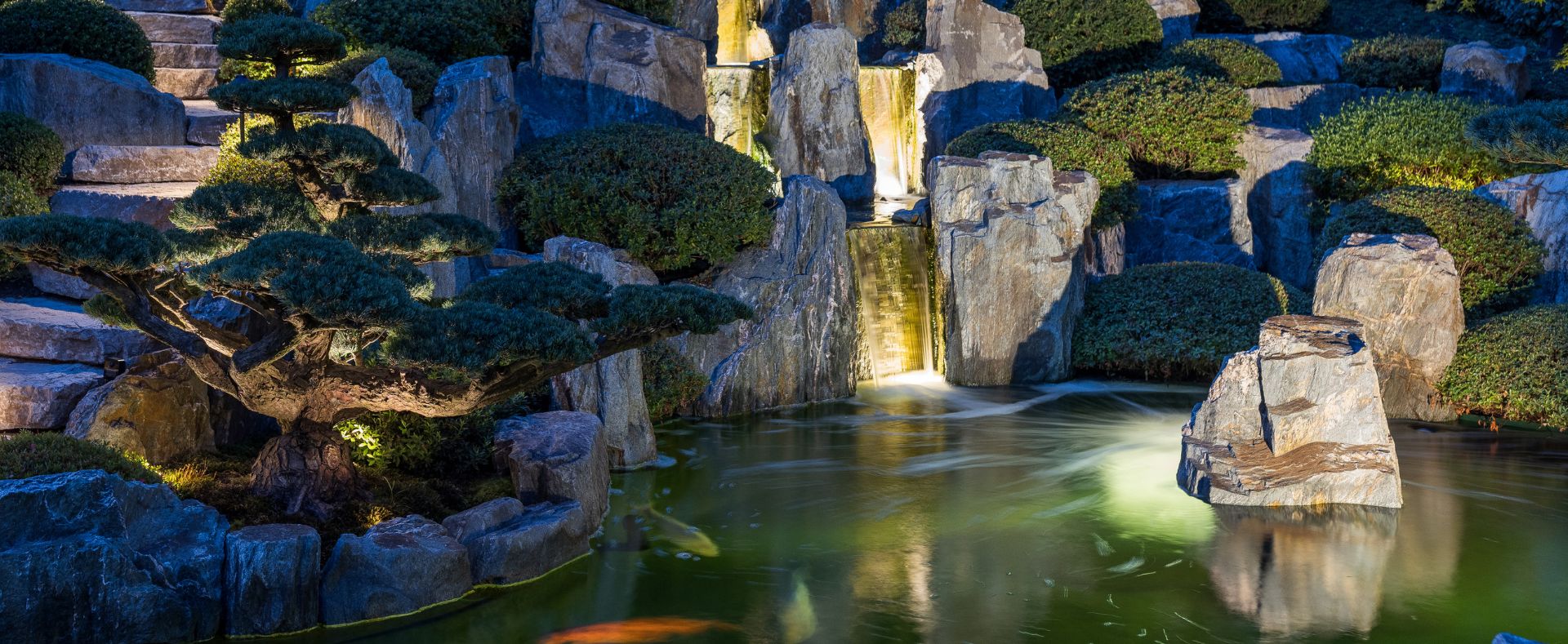
Moving water is the most dramatically rewarding element to illuminate in any pond. A waterfall or fountain jet lit from below or from the side catches every droplet, creates a column of light that follows the water's movement, and produces reflections across the surrounding yard that a static pond surface never could.
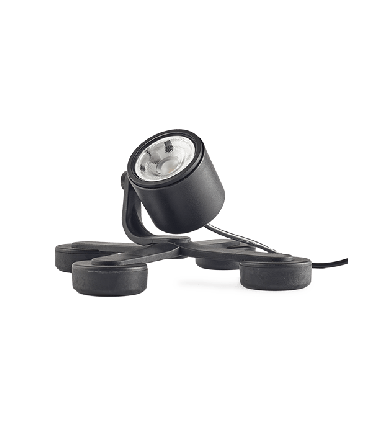
For waterfalls, position the SUB at the base of the fall, angled upward into the falling water. The beam travels through the water column as it falls, catching the turbulence and creating a shimmering curtain of light. For fountain jets, place one or two SUB fixtures around the base of the jet, pointing upward into the spray. Multiple fixtures at different angles around a single jet produce a more saturated, even glow than a single fixture on one side.
SUB's 5-meter light range provides enough throw for most residential pond waterfalls and fountain features. For larger water walls or wider cascade features, use two SUB fixtures placed symmetrically at the base, which also eliminates the single-shadow effect that one fixture alone can produce.
Creating depth and ambiance
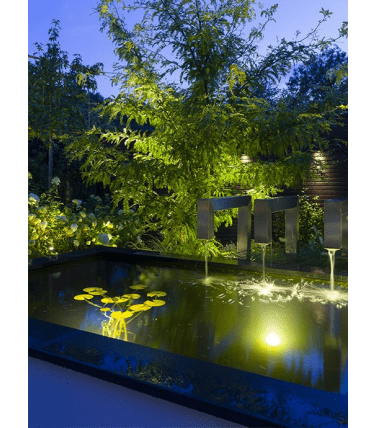
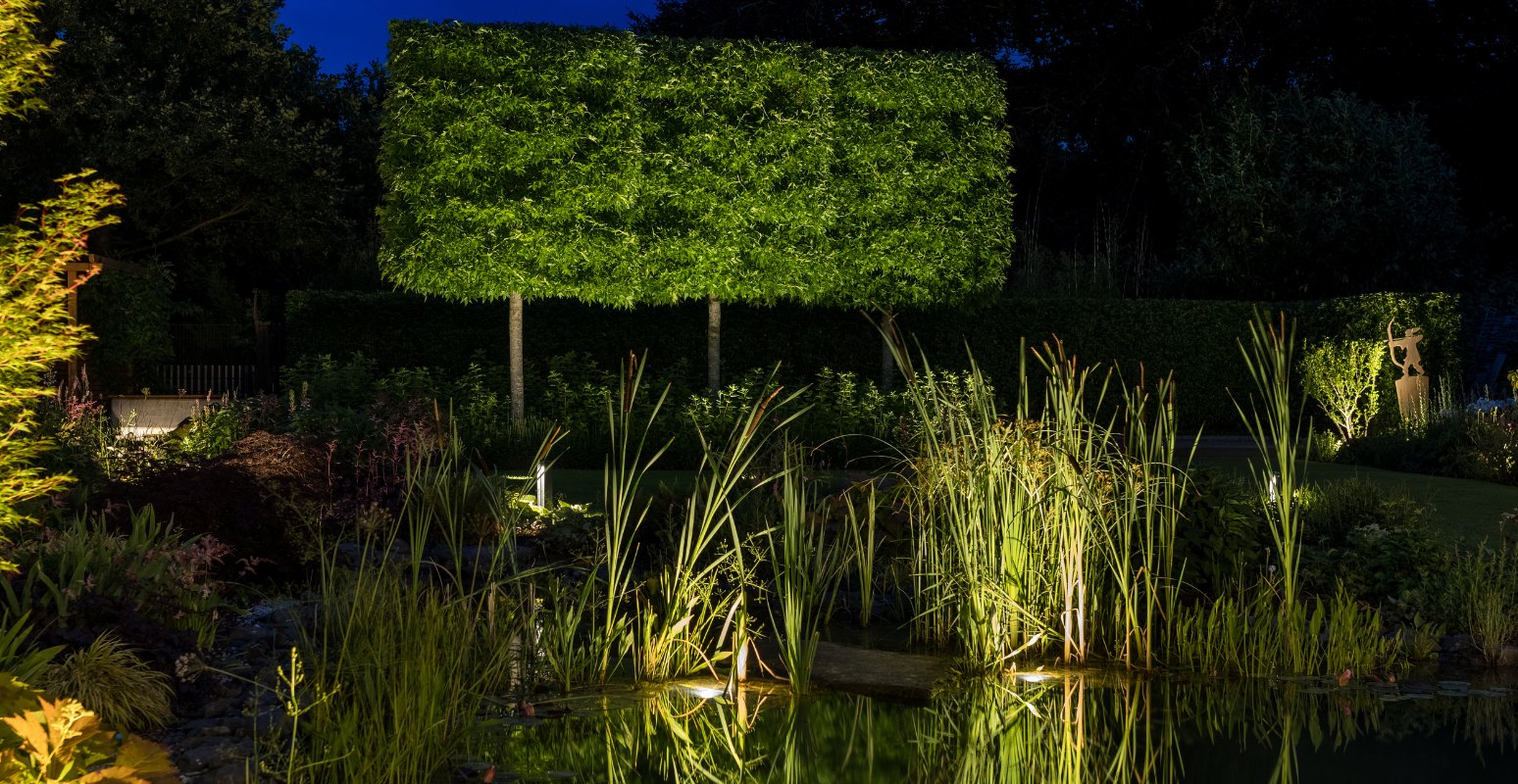
Still ponds respond differently to lighting than moving water features. The goal here is depth: making the pond feel like it extends further than it does, creating a sense of volume below the surface, and revealing what's living and growing in the water.
Place the SUB at the deepest point of the pond, pointing upward toward the surface. At this position, the light travels through the maximum depth of water before reaching the surface, creating the richest, most layered glow. If the pond has defined planting zones, position a second SUB to illuminate the submerged plants from the side, catching the movement of stems and leaves as water circulation moves them. For koi ponds, position fixtures to illuminate the areas where fish are most active, which typically means the deeper, open zones away from the edge planting.
Combine your pond lights with surrounding landscape lighting for the most effective overall effect. Path lights and deck lights around the pond perimeter frame the water feature without competing with it. Outdoor spotlights aimed at adjacent trees and hardscape features like retaining walls and raised planters extend the composition beyond the water itself. Use our free lighting design service to plan your pond and perimeter lighting as a complete scheme.